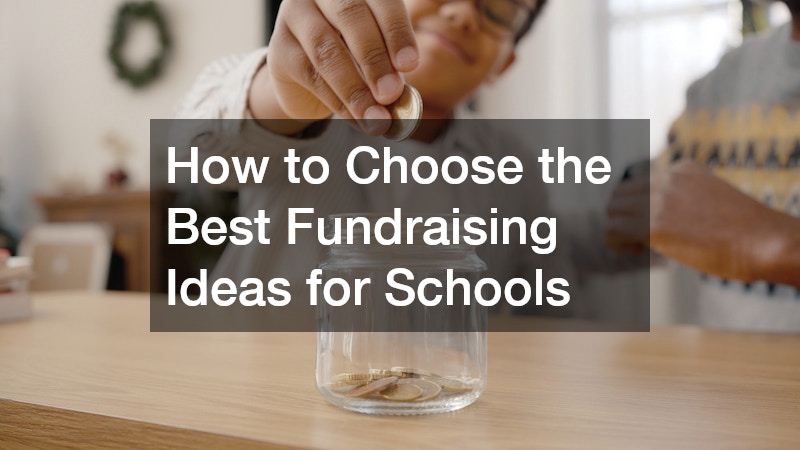
School fundraisers can help provide resources, experiences, programs, and activities that may not fit within an ordinary school budget. However, organizing a successful fundraiser involves more than selecting an activity and asking families to participate. Schools need to consider their students, families, staff, community, available resources, and fundraising goals when deciding which approach makes the most sense.
The right fundraiser should be practical to organize, enjoyable for participants, and capable of generating meaningful support. By evaluating a few important factors before getting started, schools can choose an opportunity that fits their community and encourages people to participate.
Start With a Clear Fundraising Goal
Before comparing different fundraising ideas for schools, determine what the fundraiser needs to accomplish. A specific goal gives organizers a way to evaluate potential options and measure the results afterward.
For example, a school may need money for classroom supplies, technology, extracurricular activities, field trips, athletic equipment, or a larger improvement project. The amount needed can influence which fundraiser is appropriate.
A small fundraiser may work well when the goal is relatively modest, while a larger campaign may require multiple activities or a longer fundraising period. Establishing the target first can help organizers avoid choosing an activity that requires considerable effort but is unlikely to generate enough support.
It can also help to explain the purpose of the fundraiser to families and students. People may be more motivated to participate when they understand exactly how their contributions will benefit the school.
Consider Your Students’ Ages
The age of the students participating should play an important role in the selection process. A fundraiser that works well for elementary students may not generate the same enthusiasm among middle or high school students.
Younger children may enjoy activities involving games, crafts, simple challenges, or family participation. Older students may prefer fundraisers that give them more independence or connect with their interests.
Schools should also consider whether students will be responsible for selling products, collecting donations, promoting an event, or completing another task. The activity should be appropriate for their age and abilities while remaining manageable for teachers and families.
When students enjoy participating, they may be more likely to encourage friends, relatives, and community members to support the campaign.
Evaluate the Time and Effort Required
Every fundraiser requires some level of planning, but the amount of work can vary significantly. Organizers should consider how much time staff, parent volunteers, and students can realistically contribute.
An event that requires extensive preparation may not be practical for a school with limited volunteers. Similarly, a fundraiser that requires teachers to manage numerous administrative tasks could create unnecessary pressure during an already busy school year.
Consider the entire process, including preparation, promotion, participation, collection, fulfillment, and cleanup. Looking at the complete workload can help organizers choose an option that provides a reasonable balance between effort and potential results.
Think About Your School Community
Every school community is different. Factors such as family schedules, local interests, community demographics, and previous fundraising experiences can influence participation.
Consider what has worked well in the past. If families responded positively to a particular type of fundraiser, that experience may provide useful insight into what they are willing to support again.
At the same time, schools should avoid assuming that a previous success will automatically produce the same results every year. Asking families for feedback can reveal which activities they enjoyed and which types of fundraisers they would be interested in trying.
Community involvement can also expand the potential audience beyond students and parents. Local businesses, alumni, and other community members may be willing to participate when the fundraiser provides a clear opportunity to support students.
Compare Potential Costs
Fundraising is intended to generate money, so organizers should carefully consider the costs associated with each option. Some activities require little upfront spending, while others may involve products, supplies, venue costs, advertising, payment processing, or other expenses.
Look at the expected revenue as well as the total costs before selecting an activity. A fundraiser that generates substantial sales may not provide a significant financial benefit if much of the revenue goes toward expenses.
Understanding the potential return can help schools prioritize activities that make efficient use of their resources. It may also be useful to compare several options rather than choosing the first idea that appears promising.
Prioritize Participation and Accessibility
A successful fundraiser should give as many students and families as possible an opportunity to participate. Organizers should think about whether the activity is accessible to families with different schedules, budgets, and circumstances.
For example, an event that requires families to attend at a specific time may be difficult for people with work or transportation obligations. Offering multiple ways to participate can help increase involvement.
Schools should also consider whether participation requires students to purchase something or sell products to people they know. Donation-based activities, community events, and other approaches may provide alternatives that are more comfortable for some families.
Making participation flexible can help create a more inclusive fundraising experience.
Measure the Results
After the fundraiser ends, take time to evaluate the results. Compare the amount raised with the original goal and consider how much time, money, and volunteer effort went into the campaign.
Feedback can be just as valuable as the financial results. Ask students, families, teachers, and volunteers what they liked about the fundraiser and what could be improved.
This information can help schools make better decisions in the future. Tracking participation and results over time can also reveal which fundraising approaches consistently provide strong outcomes.
Choosing effective fundraising ideas for schools requires more than finding an activity that sounds fun. Schools should consider their fundraising goals, student ages, available volunteers, community preferences, costs, accessibility, and potential for participation.
The best option will depend on the individual school and the purpose of its campaign. By evaluating each possibility carefully and gathering feedback after the fundraiser, organizers can develop activities that raise money while creating positive experiences for students, families, and the broader school community.